Preparing for Baby's First Winter: Essential Gear Guide
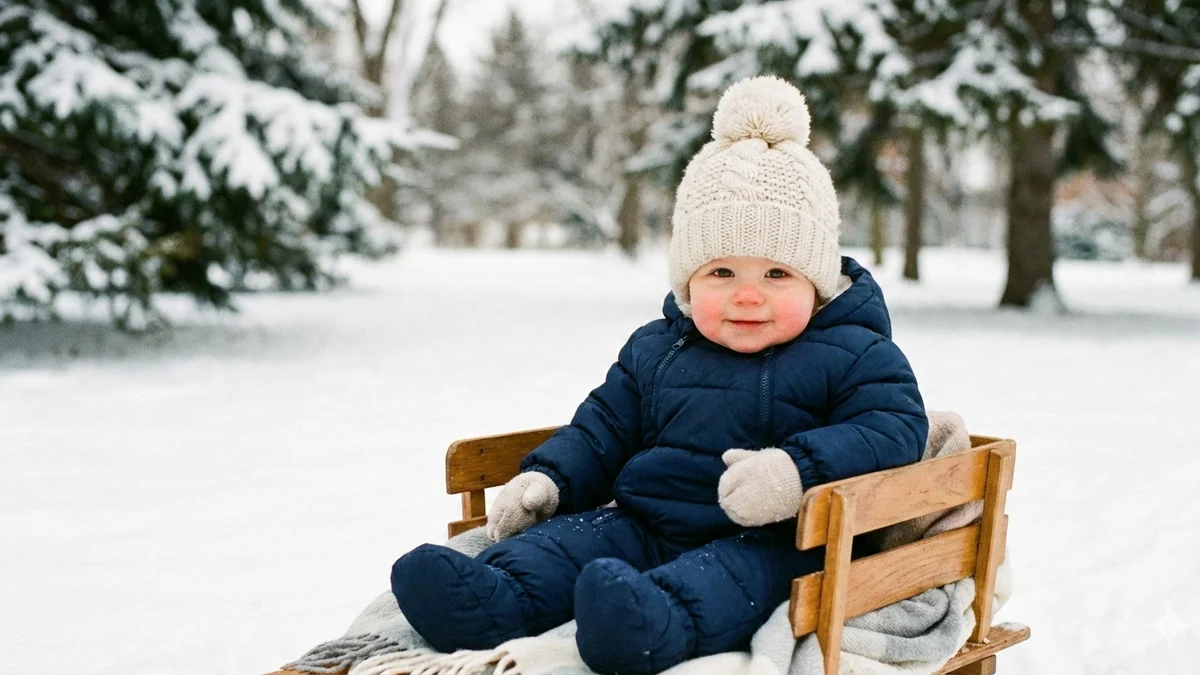
The first snowfall with a baby brings magical moments—but also lots of questions. How do you dress a baby who can't tell you they're cold? Is it safe to go outside? What winter gear do you actually need versus what's just marketing?
Winter with a baby doesn't have to be stressful. With the right knowledge and essential gear, you can keep your little one safe, warm, and comfortable all season long. This guide covers everything from proper layering to choosing winter products that actually matter.
Understanding Baby's Temperature Regulation
Before we dive into gear, it's important to understand that babies can't regulate their body temperature as well as adults. They lose heat faster, especially through their heads, and can't shiver effectively to warm up.
Signs your baby might be too cold:
- Cold hands and feet (though these alone don't always indicate baby is cold)
- Cool chest or back when you touch under their clothes
- Pale or blotchy skin
- Unusually quiet or lethargic
- Cool to touch on the back of neck
Signs your baby might be too hot:
- Sweating
- Flushed, red cheeks
- Rapid breathing
- Heat rash
- Damp hair
- Fussy or restless
The golden rule: Dress baby in one more layer than you're wearing, plus a hat. Check the back of their neck or chest (not hands and feet) to gauge temperature.
Safe Layering: The Foundation of Winter Warmth
Layering is key to keeping baby comfortable in winter. Multiple thin layers trap heat better than one thick layer and allow you to adjust as needed.
The Three-Layer System:
Layer 1 - Base Layer (Against Skin):
- Soft, breathable fabric like cotton or merino wool
- Long-sleeved onesie or bodysuit
- Purpose: Wicks moisture and provides first layer of warmth
Layer 2 - Middle Layer (Insulation):
- Fleece sleeper or warm outfit
- Pants and long-sleeved shirt
- Purpose: Traps warm air and provides main insulation
Layer 3 - Outer Layer (Protection):
- Winter coat, bunting, or snowsuit for outdoors
- Purpose: Blocks wind and moisture
Don't forget:
- Hat (babies lose significant heat through their heads)
- Mittens or hand covers
- Warm socks or booties
- Blanket for stroller (but never in car seat!)
Critical Car Seat Safety in Winter
This is one of the most important winter safety topics that many parents don't know about.
NEVER put a baby in a car seat wearing a puffy winter coat or snowsuit.
Here's why: In a crash, the coat compresses, creating slack in the harness straps. This can allow baby to slip out of the seat or suffer serious injury.
The Safe Way to Keep Baby Warm in the Car:
- Dress baby in thin layers
- Buckle baby into car seat with snug harness straps
- Place coat or blanket OVER the buckled harness
- Warm up the car before putting baby in if possible
The "Coat Test": Put baby's coat on, buckle them in, and tighten straps snugly. Remove coat without loosening straps. Put coat back on. If you can buckle the straps without adjusting them, the coat is thin enough for the car seat. If you need to loosen straps, the coat is too puffy.
Better options:
- Car seat covers or bundlers designed to go over harness
- Fleece jackets (much thinner than puffy coats)
- Blankets over the harness
- Warm the car before loading baby
This is non-negotiable for safety. The inconvenience of removing coats is worth protecting your baby in a crash.
Essential Winter Gear: What You Really Need
Let's separate the must-haves from the nice-to-haves.
MUST-HAVES:
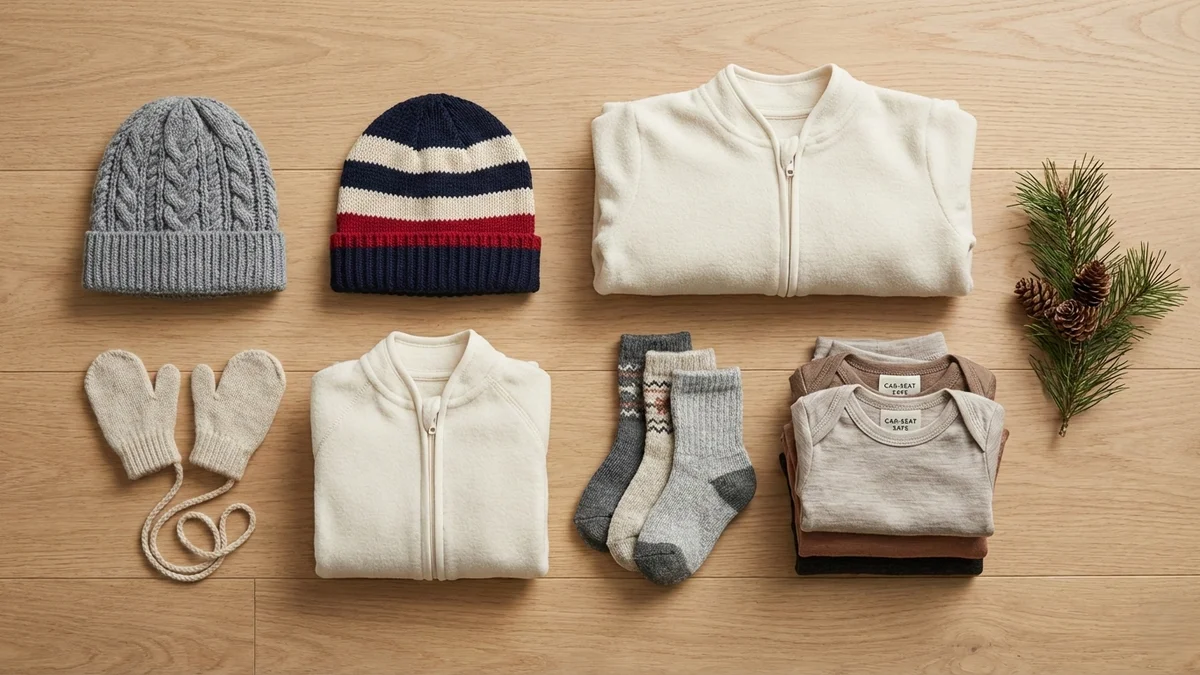
Winter Hats: Get several because they get lost constantly. Look for hats that:
- Cover ears completely
- Tie or have snug fit (but not too tight)
- Are soft and non-itchy
- Come in different weights for varying temperatures
Mittens or Hand Covers: Baby mittens fall off constantly (it's basically their job). Solutions:
- Mittens that attach to coat sleeves
- Fold-over hand covers on sleepers
- Mittens with elastic that actually stays on
- Buy extras—you'll lose them
Warm Sleepers: Fleece or thermal sleep sacks are safer and easier than blankets for sleep. Look for:
- TOG rating appropriate for room temperature
- Size that fits properly (not too big)
- Sleeveless or armless designs for warmth without overheating
Weather-Appropriate Outerwear:
- Bunting or snowsuit for very cold weather (0-30°F)
- Fleece jacket for mild winter days (30-50°F)
- Make sure it fits over regular clothes without being too bulky
Warm Socks and Booties: Multiple pairs because they also disappear mysteriously. Fleece-lined or wool socks work well.
NICE-TO-HAVES:
Stroller Winter Accessories:
- Weather shield or rain cover (blocks wind and precipitation)
- Stroller bunting or footmuff (keeps baby warm in stroller)
- Handlebar muffs (keeps YOUR hands warm while pushing)
Humidifier: Winter indoor heating dries out air. A cool mist humidifier in baby's room helps with:
- Dry skin prevention
- Easier breathing
- Better sleep
- Reduced static electricity
Warm Bath Products:
- Thick hooded towels for after-bath warmth
- Moisturizing lotion for dry winter skin
- Baby-safe bath oil for preventing dry skin
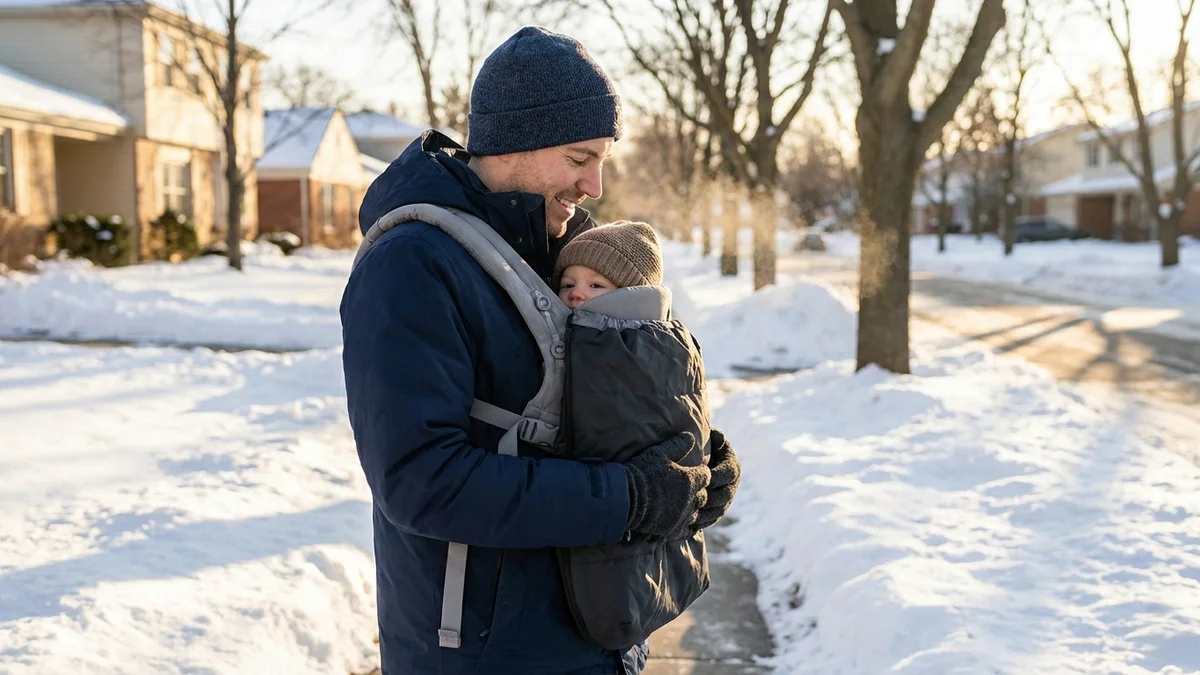
Baby Carrier Winter Cover: If you babywear, a carrier cover keeps both of you warm during walks. Your body heat helps warm baby, so they need less bundling when worn.
DON'T NEED:
Heating Blankets or Pads: These can cause overheating or burns. Never use them for babies.
Shoes for Non-Walking Babies: Cute, but unnecessary. Warm socks or booties work better and are safer.
Expensive Designer Winter Gear: Babies outgrow clothes in weeks. Save money for things that matter.
Indoor Temperature and Sleep Safety
Ideal Room Temperature: Keep baby's room between 68-72°F (20-22°C). Some experts recommend slightly cooler (65-68°F) to reduce SIDS risk.
Safe Sleep in Winter:
Follow these guidelines:
- Use sleep sack instead of loose blankets
- Dress baby in layers they can sleep in comfortably
- Don't overdress—overheating is dangerous
- Feel baby's chest or back of neck to check temperature
- Remove hats for indoor sleep (babies regulate temperature through their heads)
- Keep crib away from windows, drafts, or heaters
Choosing the Right Sleep Sack:
Sleep sacks come with TOG ratings (Thermal Overall Grade):
- 0.5 TOG: Summer, room above 74°F
- 1.0 TOG: Spring/Fall, room 68-74°F
- 2.5 TOG: Winter, room 61-68°F
- 3.5 TOG: Very cold, room below 61°F
Match the TOG rating to your room temperature, then adjust baby's clothing layers underneath.
Going Outside in Winter: Is It Safe?
Yes, you can go outside with a baby in winter! Fresh air is good for babies and parents. Just take precautions.
When it's safe to go out:
- Temperature above 0°F (wind chill considered)
- Baby is properly dressed in layers
- Outings are relatively brief (15-30 minutes for very cold weather)
- Baby is healthy (no fever or illness)
When to stay inside:
- Wind chill below 0°F
- Baby is sick or has breathing difficulties
- Extremely windy conditions that make it hard to breathe
- You can't dress baby appropriately
Outdoor Winter Tips:
- Keep outings shorter in extreme cold
- Watch for signs of discomfort or cold
- Cover stroller to block wind (but ensure air circulation)
- Check baby frequently
- Plan indoor backup options
- Nurse or bottle feed before going out (warm baby from inside)
Remember: You're not a bad parent for staying inside on brutally cold days. Sometimes the best choice is indoor play.
Winter Health: Keeping Baby Well
Common Winter Illnesses:
Winter brings increased risk of:
- Respiratory infections (RSV, flu, colds)
- Dry skin and eczema
- Dehydration (from dry indoor air)
Prevention Strategies:
Limit Germ Exposure:
- Wash hands frequently (yours and anyone touching baby)
- Avoid crowded indoor spaces during peak illness season
- Keep baby away from visibly sick people
- Consider delaying non-essential appointments during flu season
- Ensure caregivers and close contacts get flu shots
Maintain Moisture:
- Run humidifier in baby's room
- Moisturize baby's skin after baths
- Keep baby hydrated (breast milk or formula)
- Avoid over-bathing (dries out skin)
Watch for Warning Signs: Call your pediatrician if baby has:
- Fever (100.4°F or higher for babies under 3 months)
- Difficulty breathing or rapid breathing
- Persistent cough
- Refusal to eat
- Unusual lethargy
- Signs of dehydration (fewer wet diapers)
Winter Dry Skin Solutions:
- Use fragrance-free, gentle moisturizer after baths
- Bathe less frequently (2-3 times per week is fine)
- Use mild, unscented baby soap
- Run humidifier 24/7 in baby's room
- Dress baby in soft, breathable fabrics
Feeding in Winter
Breastfeeding:
- Stay hydrated yourself (winter air dehydrates)
- Nurse in warm, comfortable spots
- Use nursing covers for warmth if needed
- Consider skin-to-skin under a blanket for warmth and bonding
Bottle Feeding:
- Warm bottles slightly more if baby prefers (always test temperature)
- Keep formula powder and water at room temperature
- Sterilize bottles regularly (germs spread more in winter)
Starting Solids in Winter: Great opportunity to introduce warm foods:
- Warm (not hot) purees or oatmeal
- Soups and stews (age-appropriate consistency)
- Roasted winter vegetables
- Always test temperature before offering
Winter Activities for Baby
Just because it's cold doesn't mean you're stuck doing nothing!
Indoor Activities:
- Tummy time on warm, soft surfaces
- Baby sensory play with winter textures
- Read winter-themed books
- Sing songs and dance
- Visit indoor play areas or libraries
- Set up safe exploration zones
- Baby classes (swimming, music, sensory)
Outdoor Activities (when weather permits):
- Short walks in the stroller
- Playing in snow (supervised, brief)
- Looking at winter scenery
- Visiting outdoor winter markets
- Gentle sledding (with baby in carrier, walking slowly)
Winter Sensory Play Ideas:
- Let baby touch snow briefly (supervised)
- Ice painting (freeze colored water, let baby touch)
- Winter texture baskets (soft fleece, fuzzy hats, smooth mittens)
- Window watching (birds, snow falling)
Managing Holiday Stress with a Baby
Winter includes major holidays, which can be stressful with a baby.
Tips for Holiday Survival:
Maintain Routines:
- Try to keep nap and bedtime consistent
- Don't skip naps for events (leads to meltdowns)
- Bring portable sleep solutions if needed
Set Boundaries:
- It's okay to decline invitations
- Limit visiting time when baby needs rest
- Ask guests to wash hands before holding baby
- Say no to sick visitors (no guilt!)
Travel Smart:
- Pack extra layers and changes of clothes
- Bring familiar comfort items
- Plan for feeding and diaper changes
- Don't overschedule
Manage Expectations:
- You don't need perfect holiday photos
- Baby won't remember this year's celebrations
- Taking care of baby's needs comes first
- It's fine to skip traditions this year
Winter Budget Tips
Winter baby gear can get expensive. Here's how to save:
What to Buy New:
- Car seats (always buy new for safety)
- Sleep sacks (if affordable)
- Items that touch baby's skin frequently
What to Buy Used/Secondhand:
- Winter coats and snowsuits (babies outgrow in weeks)
- Hats and mittens (wash thoroughly first)
- Stroller accessories
- Baby carriers
Money-Saving Strategies:
- Size up so clothes last longer
- Buy end-of-season sales for next year
- Use layering instead of expensive snowsuits
- Borrow from friends with older babies
- Join buy-nothing groups or baby gear swaps
DIY Solutions:
- Regular blankets over car seat harness (instead of expensive car seat covers)
- Make stroller rain cover with clear shower curtain
- Cut-off adult sock becomes baby leg warmer
- Fleece blanket with holes becomes makeshift poncho
Creating a Winter Emergency Kit
Keep these items ready in your diaper bag all winter:
The Essentials:
- Extra layers of clothing
- Spare hat and mittens
- Blanket
- Hand warmers (for parents' hands, never directly on baby)
- Tissues
- Lip balm and lotion
- Thermometer
- Medications (if needed)
- Emergency contact numbers
For the Car:
- Blankets (multiple)
- Extra coat for baby
- Bottles of water
- Non-perishable snacks (for older babies/parents)
- First aid kit
- Phone charger
- Flashlight
Winter Milestones and Development
Winter babies might reach milestones differently than summer babies, and that's okay!
Tummy Time in Winter:
- Do it on warm surfaces
- Use heating if room is cold
- Consider doing it after bath when baby is warm
- Dress in layers that allow movement
Crawling/Walking in Winter:
- Indoor spaces are perfect for practice
- Warm, grip-friendly socks help
- Clear safe spaces free of winter clutter
- Take advantage of indoor playtime
Social Development:
- Babies still need socialization in winter
- Video calls with family count
- Indoor baby classes provide interaction
- Playdate bubbles with healthy families
Remember: Babies develop on their own timeline regardless of season. Don't compare your winter baby to someone's summer baby who has more outdoor time.
The Mental Health Factor
Winter with a baby can be isolating. Shortened days, cold weather, and being stuck inside can affect mental health.
Combat Winter Blues:
- Get outside even briefly when possible (fresh air helps)
- Open curtains for natural light
- Join online parent groups
- Schedule virtual coffee dates
- Ask for help when needed
- Consider vitamin D supplements (ask your doctor)
- Keep up with self-care basics
- Watch for signs of postpartum depression or seasonal affective disorder
When to Seek Help: If you're experiencing persistent sadness, anxiety, hopelessness, or scary thoughts, call your doctor immediately. Winter can worsen postpartum mood disorders. Treatment is available and effective.
Winter with Different Ages
Newborns (0-3 months):
- Keep outings brief and infrequent
- Focus on indoor bonding
- Maintain warm sleep environment
- Watch for signs of illness
- Don't stress about getting out much
Older Babies (3-6 months):
- Can tolerate longer outings
- Enjoy looking at winter scenery
- Need proper layering for temperature changes
- Start enjoying winter sensory experiences
Mobile Babies (6-12 months):
- Want to explore everything
- Need room to move in winter gear
- May resist hats and mittens (keep trying!)
- Can participate in winter activities
- Indoor play spaces become lifesavers
Real Talk: Winter Challenges
Let's be honest about what's hard:
The Laundry Never Ends: Multiple layers, spit-up on coats, wet mittens—it's constant. Lower your standards and do laundry more frequently.
Getting Out Takes Forever: Layer baby, layer yourself, pack diaper bag, realize you forgot something, start over. Plan 30 extra minutes for any outing.
Everyone Has Opinions: "Baby needs a hat!" "That's too many layers!" "You're going outside in THIS?" Smile, nod, do what you know is right.
Cabin Fever is Real: Being stuck inside day after day is hard on everyone. Find indoor activities, connect virtually, and be gentle with yourself.
Constant Worry: Is baby warm enough? Too warm? Getting sick? This is normal parent anxiety. Trust your instincts and call the pediatrician when unsure.
The Silver Lining
Winter with a baby isn't all challenges. There are beautiful aspects too:
- Cozy snuggles under blankets
- First time seeing snow
- Fewer crowds at stores and attractions
- Excuse to stay in pajamas all day
- Extra cuddle time
- Slower pace of life
- Magical holiday moments
- Building resilience as a family
The Bottom Line
Preparing for baby's first winter doesn't require buying everything or becoming an expert overnight. It requires:
- Understanding baby's temperature needs
- Having essential gear (not everything marketed to you)
- Following car seat safety rules religiously
- Watching for signs of cold or overheating
- Knowing when to go out and when to stay in
- Taking care of your own mental health
- Being flexible and adjusting as needed
Winter with a baby is a season—literally. It will pass. You'll learn what works for your family, develop your own routines, and before you know it, you'll be a winter baby pro.
Stay warm, stay safe, and enjoy those snuggles. You've got this!
Found this helpful? Share it!
About Mish Baby Guide Team
Part of the MishBabyGuide team, dedicated to helping parents make informed decisions about baby products.